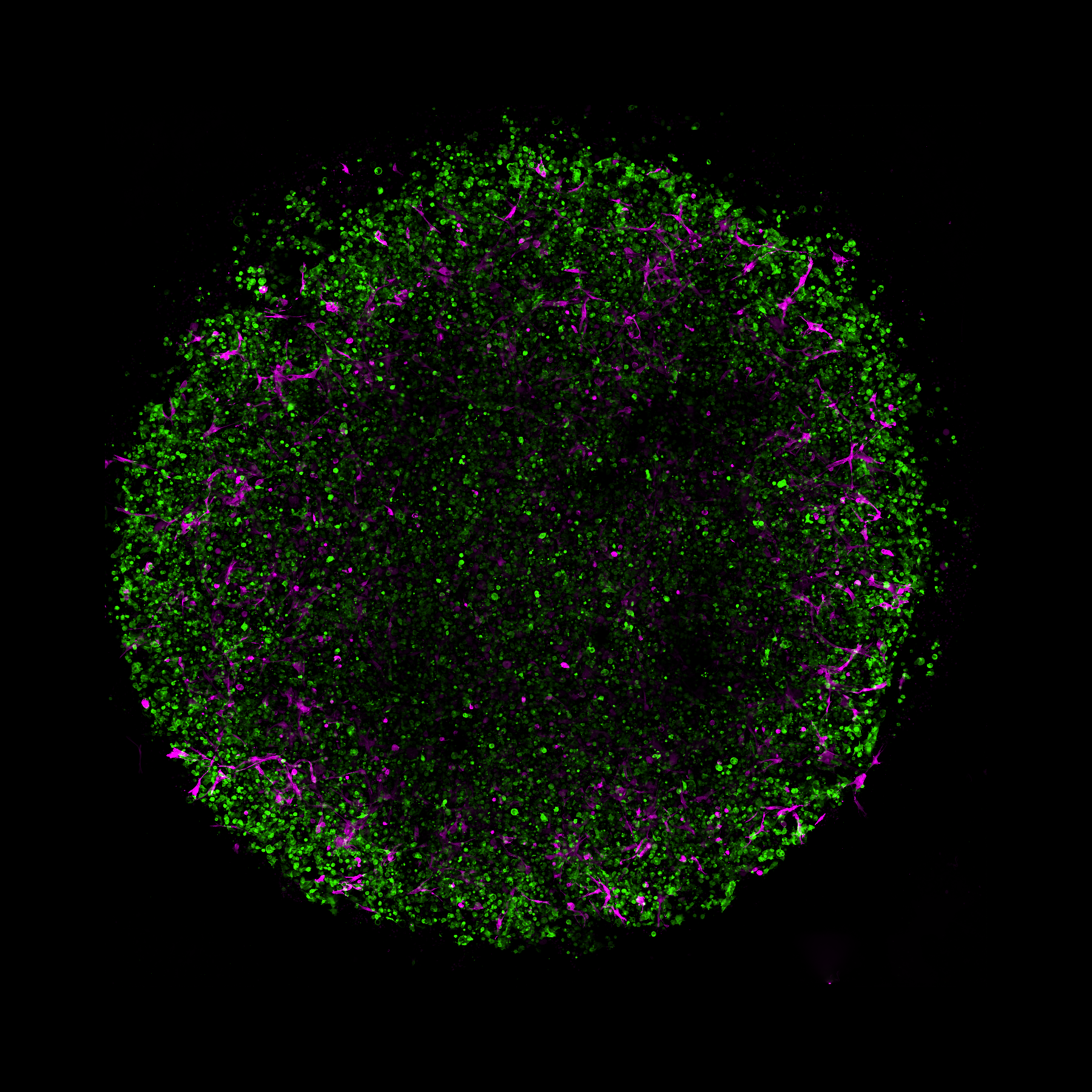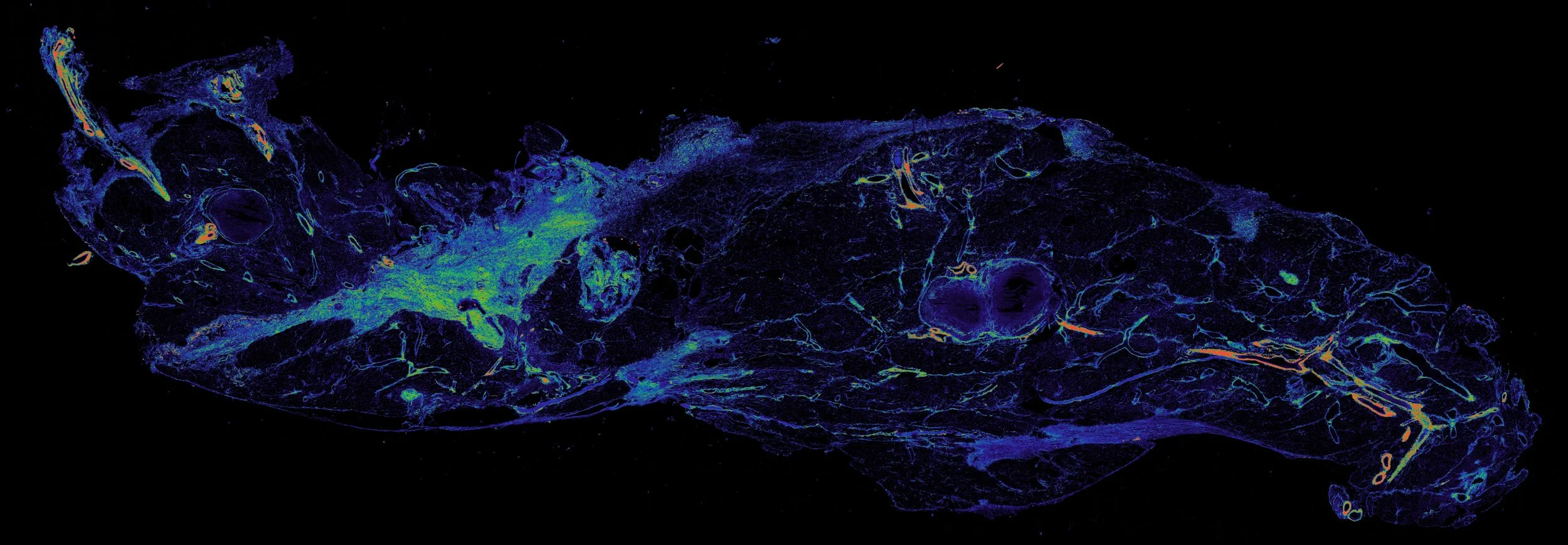
*Whole-Slide Second Harmonics Imaging showing collagen fibers in breast tumor tissue
Mechanical Conditioning Drives Tumor Behavior
Tumor progression is influenced not only by the genetic and molecular features of cancer cells, but also by the physical properties of the tumor microenvironment. Fibrosis-associated stiffening of the extracellular matrix alters mechanotransduction signaling and contributes to invasive behavior, resistance to therapy and metastatic recurrence. We have shown that exposure to a stiff matrix induces stable cytoskeletal and transcriptional states that persist even after cells are removed from their original environment. We term this process mechanical conditioning. Chromatin remodeling downstream of mechanotransduction allows cancer cells to retain these acquired features even in the absence of mechanical stimulation, a mechanical memory of the tumor microenvironment. Stiffness history, rather than stiffness alone, governs the invasive and therapeutic behavior of cancer cells. Cancer cells sense matrix stiffness through their cell-matrix adhesions and transmit it through the actin cytoskeleton, which balances traction against cortical tension to drive invasion and mechanotransduction. Using quantitative imaging and biophysical measurement, from traction force microscopy and second-harmonic generation to optical coherence elastography and intravital imaging, we define how this mechanosensing machinery, together with the transcriptional programs it engages, establishes durable conditioned states and links them to invasion and metastasis. To quantify this biology, we developed the MeCo score, a multigene expression signature derived from a fixed set of 1,004 genes that measures tumor stiffness response. MeCo complements existing breast cancer genomic biomarkers, such as MammaPrint and Oncotype DX, by capturing a biological axis they do not represent.
Clinical Impact of MeCo
Mechanical memory is durable but not permanent. The conditioned state persists for a time without further mechanical input, yet its long-term maintenance requires reinforcement by matrix stiffness. A sustained reduction in stiffness can therefore reverse it. Antifibrotic therapy provides a clinical means to achieve this, lowering matrix stiffness within the tumor. A high MeCo score marks a tumor whose aggressiveness is driven by stiffness, and these are the tumors that respond when stiffness is reduced. Tumors with low scores are not stiffness-driven and gain little from the same treatment. MeCo therefore does more than estimate risk. It is not only prognostic but predictive, identifying in advance which patients should benefit from antifibrotic therapy. In a randomized phase II trial in HER2-negative breast cancer, reversing the stiffness response with the antifibrotic nintedanib significantly improved outcome in patients whose tumors had high, but not low, MeCo scores. We are now evaluating MeCo prospectively and validating the assay for clinical use.
Pan-Cancer and Pan-Disease
Mechanical conditioning is not unique to breast cancer, or to cancer at all. Distinct cell lineages often activate the same pathways and make parallel decisions when exposed to force, a conservation that suggests a universal mechanical vocabulary of regulatory networks transcending both lineage and force modality. Using large gene language models trained on stiffness-responsive programs, we are extending MeCo across cancer types, predicting the mechanical state of a tumor from routine biopsy data. Our larger goal is the first unified model of cellular mechanical responses, the mechanome, which would transform mechanobiology from scattered observations into a predictive framework, with reach beyond cancer into aging and regeneration.